Once you have switched from black, sticky oil paste to a clean, waxed chain, you will rarely want to go back. That is exactly what hot wax bicycle chain application is all about: less dirt, less running noise, less friction - and ideally significantly less wear on the entire drivetrain. The only catch is that hot wax does not forgive sloppy preparation. The good news: once you have mastered the process, it is surprisingly simple.
Hot wax on the bicycle chain: What is really going on
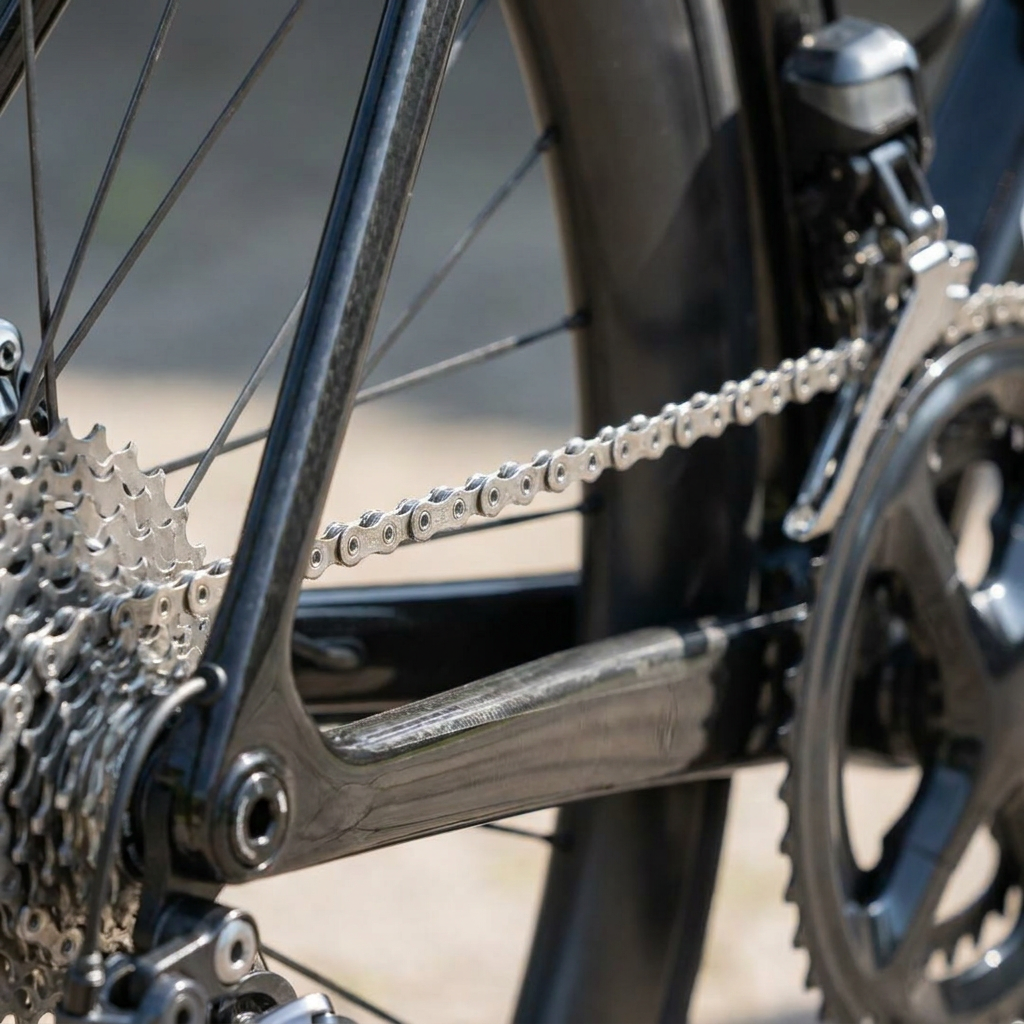
When hot waxing, the chain is not simply coated on the outside, but completely penetrated with molten wax. The wax reaches the spaces between the rollers, side plates, and pins and forms a dry lubricating film there. That is exactly the crucial difference to classic oil. Oil remains sticky, attracts abrasion and road dirt, and turns the drivetrain into a grinding paste over time. Wax works drier and cleaner.
For performance-oriented riders, this is more than just cosmetics. A clean drivetrain runs more quietly, friction remains low, and the sprockets, chainrings, and the chain itself generally last longer. This is particularly noticeable on road bikes, gravel bikes, and MTBs. With e-bikes, the higher load also requires good pressure resistance. High-quality wax formulations with solid lubricants play to their strengths here.
Nevertheless, hot wax is not automatically the best solution in every case. Those who never remove their chain, want to avoid maintenance completely, or are constantly out in wet winter slush must pay closer attention to re-waxing and maintenance intervals. Hot wax is no magic trick. It is a system - and that is exactly why it works so well.
Preparation determines the result
Most problems with hot wax bicycle chain application arise not during waxing, but during degreasing. A brand-new chain almost always comes with a preservative lubricant. It protects against corrosion in the box, but is not a clean base for wax. If oil residues remain in the chain, the wax cannot adhere properly, and the running will become noisy or uneven more quickly.
Therefore, the chain must be completely degreased before the first wax bath. Truly completely. Being bare on the outside is not enough. The crucial thing is that no oily residues remain inside either. This can be achieved either in several degreasing passes with a suitable cleaner or with one of our ZeroGrease Additives added to the wax bath
Patience is important here. A still damp chain has no place in the wax bath. Residual solvents or water deteriorate the result and can contaminate the wax. Those who work cleanly lay the foundation for a long service life, quiet running, and minimal dirt ingress.
New chain or used chain?
A new chain is the easier entry point. It is completely degreased, dried, and then waxed directly. Alternatively, you can also add it directly to the wax bath with the ZeroGrease Additive. With a used chain, more care is needed because old abrasion and oil often settle stubbornly inside. This can work, but the effort is higher. If the chain is already significantly worn, starting with a new chain is usually more worthwhile.
How the application works in practice
Once the chain is clean and dry, the actual hot wax process follows. The wax is melted in a suitable container or our Automatic Waxing Machine until it is completely liquid. The chain is dipped and moved in the bath so that air bubbles can escape and the wax can penetrate everywhere. This is exactly where the uniform lubricating film is created, which later ensures the quiet running.
The chain should stay in the wax long enough (20 min) to completely take on the temperature. Those who pull it out too early risk uneven wetting. Afterwards, it is removed, allowed to drip for a short time, and hung up to cool. In its cooled state, the chain is initially stiff. This is normal. Only by lightly moving the links does it become flexible again.
Then the chain is mounted. After the first pedal strokes or a few kilometers, it runs freely and cleanly. A slight noise immediately after installation can occur, but usually disappears quickly as the wax settles during operation. The crucial thing is that no greasy film remains on the outside. That is exactly what makes the difference in everyday use.
What temperature makes sense?
That depends on the respective wax; we recommend approx. 95°C for our wax. The crucial thing is not just any value, but a cleanly melted bath in the right range. Too cold means poor penetration, too hot is unnecessary and can damage the material and additives. Therefore: always work according to the product specifications and do not overheat by feeling.
Typical mistakes when hot waxing a bicycle chain
The most common mistake is a half-degreased chain. If oil and wax mix, no clear advantages arise, but rather a compromise that is neither properly clean nor truly durable. The second classic is rushing during drying. Those who work with residual moisture sacrifice performance and durability.
Also, putting an oily chain back into the wax bath is not a good idea. This dirties the entire bath and carries the problem over to the next waxing pass. Those who re-lubricate with oil in between should degrease completely again before hot waxing again.
Another point is the expectation in wet conditions. Wax can also work very well under difficult conditions, but just like oil, continuous rain, mud, and frequent bike washes shorten the service life.
How often does it need to be re-waxed?
That depends heavily on the area of use, performance, weather, and wax formulation. On a road bike in dry conditions, longer intervals (1000km) are more realistic than on an MTB in the dust or on a gravel bike. E-bikes additionally stress the chain with torque. A blanket mileage value therefore only helps to a limited extent.
It is better to observe the drivetrain. If the chain becomes noticeably louder, runs rougher, or looks dry, it is time for the next treatment. The advantage of the wax system: You do not react to black dirt, but to actual running behavior. This is more precise and ultimately more material-friendly.
Many riders combine hot wax as a base with a suitable liquid wax for intermediate maintenance. This can make sense if you do not want to repeat the complete process after every ride. The crucial thing is to stay in the same system and not randomly mix oil and wax.
For whom is hot wax particularly worthwhile?
If you value a clean drivetrain, the switch is almost always worthwhile. Those who ride regularly, keep an eye on chain wear, and have no desire for greasy fingers, frame stains, and clogged derailleur pulleys benefit particularly. Road cyclists appreciate the low friction, gravel riders the clean running culture in the dust, and MTB riders the reduced dirt buildup. With the e-bike, the combination of pressure resistance and wear reduction counts above all.
Hot wax is less suitable for riders who want to completely ignore maintenance. The system works strongly, but not automatically. It rewards clean work with very clean operation. Those who are willing to get started properly once will get a drivetrain that not only looks better in everyday use but also works technically more convincingly.
Practical tip for a clean start
The easiest way to switch to hot wax is with a new chain. The reason is simple: A new chain can be completely degreased much more easily than a chain that has already been ridden, in which oil, dirt, and abrasion have already accumulated deeply in the spaces. Those who start cleanly right away have less effort later and get a reproducible result from the beginning.
Alternatively, our ZeroGrease Additive can be used for getting started. It supports the degreasing process directly in the hot wax bath and makes the switch from oil to wax significantly easier. Especially for everyone who wants to keep the process as uncomplicated as possible, this is a practical solution.
The application becomes even easier with the Automatic Waxing Machine and the suitable accessories. Instead of manually controlling the temperature, flow, and handling every time, the machine ensures a clear, controlled process. Chain holders, silicone mats, and coordinated accessories help to work cleanly and safely put the chain into the wax bath, take it out, and process it further.
Exactly at this point the advantage of a coordinated system shows itself: When wax, cleaner, ZeroGrease, Waxing Machine and accessories fit together, the application does not become more complicated, but easier and repeatable. And that is exactly what you want with a performance setup.
Those who set up the process cleanly once will save time later. The drivetrain remains significantly cleaner, maintenance more predictable, and the riding experience more constant. Not spectacular in the marketing sense, but immediately noticeable on the bike.
In the end, it does not matter whether hot wax is currently considered a technology trend. The crucial thing is whether your chain runs quieter, collects less dirt, and the drivetrain lasts longer. If that is exactly your goal, then a cleanly executed hot wax application is no extra – but simply the better routine.


Leave a comment
This site is protected by hCaptcha and the hCaptcha Privacy Policy and Terms of Service apply.