
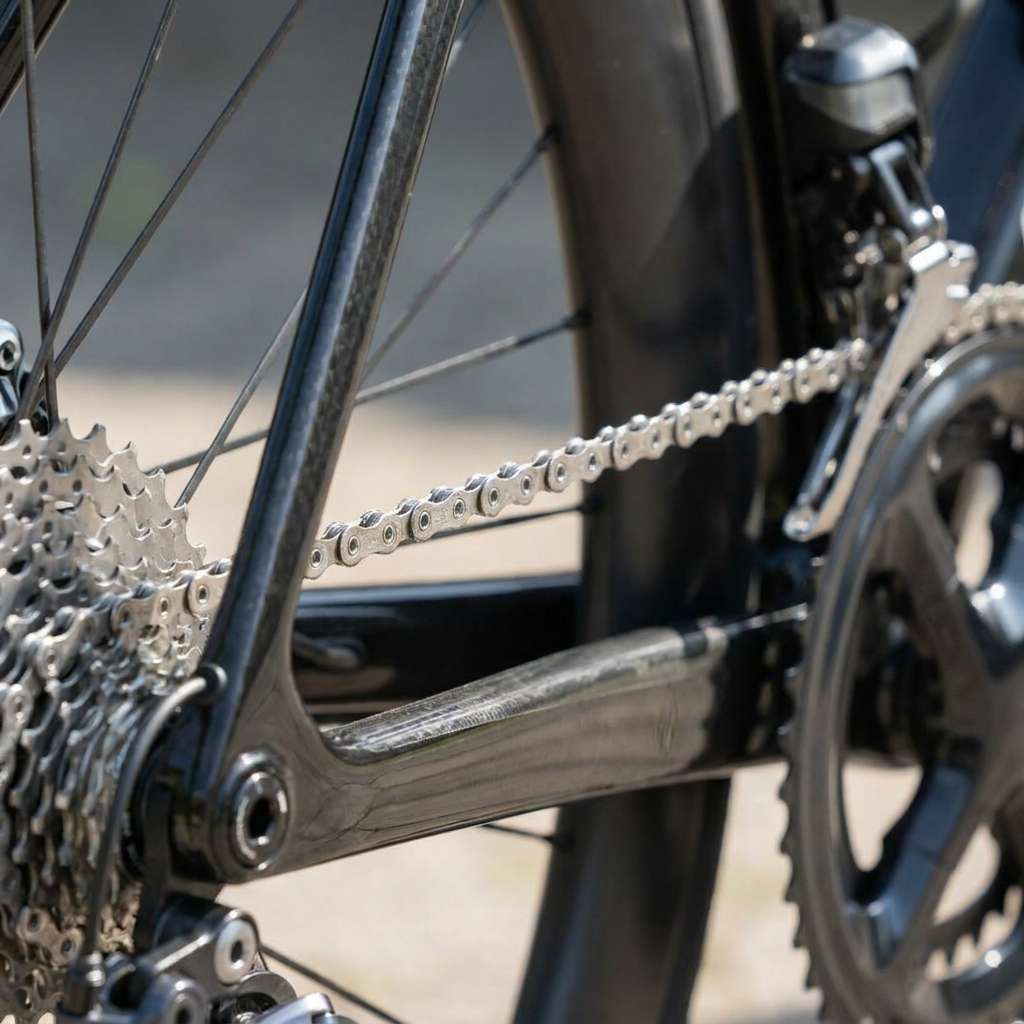
Anyone who has ever cleaned black fingers, sandy shifter pulleys, and a sticky chain after a wet ride will quickly ask the right question: Is chain wax really the better solution for bicycles than oil? For many performance-oriented riders, the answer is clear—if preparation, product choice, and application go hand in hand, the drivetrain runs cleaner, quieter, and lasts longer.
What makes chain wax different on bicycles
The biggest difference is not in the marketing, but in how it handles dirt. Classic chain oil remains wet permanently. It lubricates reliably, but attracts dust, debris, and fine dirt. This mixture creates the notorious black abrasive paste that wears out the chain, cassette, and chainrings more quickly.
Chain wax works differently. After application, it dries into a solid lubricant film. That is exactly the point that is decisive for many riders: less dirt adhesion, a smoother ride, and significantly less lubricant film on hands, frames, or panniers. Anyone who spends a lot of time on a road bike, gravel bike, or MTB will often notice the difference after just a few rides.
Technically, it gets interesting when the wax is blended with high-performance solid lubricants. Additives such as graphite, MoS2, or WS2 can further reduce friction under load and increase pressure resistance. This is not just relevant for watt hunters. It also benefits the drivetrain of e-bikes, where high chain loads and torques are involved, thanks to a durable, clean lubrication concept.
Who benefits most from using chain wax on bicycles
Not every rider has the same requirements. Anyone who only occasionally rides short distances in good weather and wants as little maintenance as possible can still get by with oil. Chain wax plays to its strengths above all when cleanliness, efficiency, and wear become more important.
On a road bike, the advantage is quickly visible because dry conditions, high cadences, and a sensitive ear for running noises complement the system perfectly. In the gravel sector, wax scores points especially because dust and fine dirt adhere significantly less. On an MTB, a lot depends on the conditions. For dry trail riding, wax is very effective, but for persistent mud, it requires more consistent aftercare. With e-bikes, however, the combination of a clean ride and good load stability is particularly convincing.
So, it is not just the type of bicycle that matters, but the intended use. Anyone who rides regularly, values a clean drivetrain, and is willing to do the initial conversion properly will usually find wax to be the better long-term solution.
The sticking point when switching: thorough degreasing
This is where a clean result is separated from frustration. Chain wax on bicycles only works properly if the chain is completely degreased before the first application. Residues of factory grease or oil prevent the wax from adhering properly. The result is poor longevity, an uneven ride, and the typical verdict that wax supposedly does not last.
That is exactly why the initial treatment is so important. A new chain must be thoroughly freedfrom preservative greases. A chain that has already been ridden often needs several cleaning cycles until no oily residues remain. This may sound like a lot of effort, but it is the technical foundation for everything that follows.
Anyone who does this step properly will be rewarded later with significantly less dirt and easier maintenance. The effort is at the beginning, not after every single ride.
Liquid wax or hot wax?
This is a valid question, because both systems have their strengths. Liquid wax is the easy entry point. It can be applied directly to the prepared chain, dries relatively easily, and is a good fit for riders looking for a clean solution with minimal equipment. For many everyday riders and ambitious amateur athletes, this is already the most sensible approach.
Hot wax is the performance-oriented variant. The chain is treated in molten wax, allowing the lubricant to penetrate very evenly into the links. When done correctly, this often delivers particularly low friction, a very smooth ride, and strong dirt resistance. The price for this is more preparation and a bit more process discipline.
So, it is not about which system is generally better. It is about which one better suits your riding profile. Anyone who wants maximum performance and a clear maintenance routine will be very happy with hot wax. Anyone looking for a clean, efficient, and practical everyday solution will often already achieve a very high standard with good liquid wax.
How long does chain wax last on bicycles?
The honest answer is: it depends. Weather, dust, load, riding style, and product quality make a big difference. Dry road miles are something completely different from wet woods, winter dirt, or a powerfully driven e-MTB.
Wax wears differently than oil. It does not simply wash away, but is gradually displaced from the stressed contact area. This is usually first noticeable acoustically. When the drivetrain gets louder or feels drier, it is time to re-wax. That is exactly why many riders like wax: the maintenance timing is often clearly audible and visible, instead of hiding in a dirty layer of oil.
A high-quality system with durable additives can improve longevity, especially under pressure and mixed conditions. We rate our hot wax at a service life of up to 1,000 km and our liquid wax at 300 km.
Common mistakes with chain wax for bicycles
Most problems are not caused by the wax itself, but by the application. The most common mistake is incomplete degreasing. Immediately after that comes riding too soon after application. Liquid wax needs time to dry and cure. Anyone who rides off immediately will spread the product on the outside rather than where it is supposed to work.
Another point is re-lubricating with oil in between. This mixes the system and practically negates the actual advantage—a dry, clean lubricant film. Applying too thickly also achieves little. What matters is not the visible amount on the outside, but a cleanly applied lubricant film in the relevant contact surfaces.
Anyone who consistently sticks to one system, keeps the chain clean, and does not delay re-waxing for too long will get significantly more stable results.
What properties good chain wax should have
Not every wax is automatically high-performance. Performance-oriented riders should look for more than just the label. What matters are clean adhesion to the chain, good pressure resistance, low dirt adhesion, and verifiable performance under real load.
It gets interesting with formulations that specifically use solid lubricants. Graphite, MoS2, and WS2 are not just buzzwords. When used correctly, they can reduce friction, better absorb pressure peaks, and stabilize the ride under load. This is especially relevant when high forces act on the drivetrain or the rider expects a noticeably smooth, precise setup.
Then there is the practical side. A good wax should not only read well in the lab, but also work in everyday life—from quick top-ups to clean use in the basement, workshop, or before an event weekend. This is exactly where specialized systems come in, like the ones we have developed for ambitious riders.
Is chain wax better than oil for bicycles?
Better is not an absolute word, but in many performance applications, wax is the more modern solution. It keeps the drivetrain cleaner, reduces the formation of abrasive dirt paste, and can run very efficiently with a good formulation. Especially for riders who understand their drivetrain as a performance component, this is a compelling overall package.
Oil still has its place. It is tolerant of mistakes, quick to apply, and often uncomplicated under persistently wet conditions. Anyone who is willing to do the initial conversion properly will usually get exactly what really matters in everyday bicycle use with wax: less dirt, less running noise, and better control over wear and maintenance intervals.
In the end, it is not the system with the loudest promise that wins, but the one that suits your intended use and is applied consistently. If you want a clean, quiet, and durable drivetrain, chain wax is not a trend, but a very sensible decision.
Chain wax for bicycles ensures less friction, a quieter ride, and clean drivetrains. This is how you find the right wax for your intended use.


Leave a comment
This site is protected by hCaptcha and the hCaptcha Privacy Policy and Terms of Service apply.